


High-value home insurance for custom, waterfront, acreage, and heritage homes in BC.
Your policy can look fine on the declarations page and still be short in the places that decide a claim — the rebuild number, the bylaw cap, the jewellery and art sublimits, the detached structures, and the liability limit. You don’t find out until you claim. Once a Lower Mainland home nears $1.5 million to rebuild — or holds fine art, a jewellery collection, a wine cellar, acreage, waterfront exposure, or heritage construction — the standard product starts to leave gaps. A high-value policy is built to close them: Guaranteed Replacement Cost on the building, agreed value on what’s inside, combined liability up to $5 million, and a dedicated claims experience built for this tier.
Prime Insurance has been family-owned in Surrey since 1994 — a multilingual brokerage that reads your policy with you in English, Punjabi (ਪੰਜਾਬੀ), or Hindi (हिन्दी), and places these homes with the specialty markets they need. We regularly place Lower Mainland homes from $2 million to $20 million in rebuild, and our panel writes up to $50 million dwelling limit.
This is the dedicated page for the high-value tier. For the four standard coverages and the optional ones every BC home carries, start with the pillar: Home Insurance in BC. If you own and live in the home, the homeowner page covers the package end to end — this page is the layer on top.
Send your declarations page for a free 30-minute high-value reviewPrefer to talk it through first? Call 604-582-0557 — a licensed advisor answers during business hours — or get a quote online.
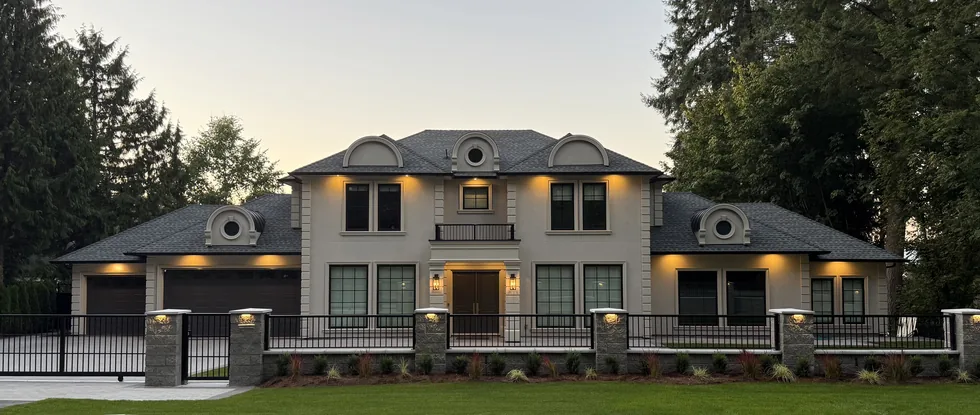
Is your home in high-value territory?
The number that matters is rebuild cost — not market value, not what you paid, not BC Assessment. There’s no bright line, but once that number nears $1.5 million, the standard product starts leaving gaps a high-value policy is built to close. In much of the Lower Mainland, that now catches homes that were mainstream five years ago.
It isn’t only the rebuild number. Any one of these usually moves a home into the tier:
- A jewellery collection, fine art, watches, wine, firearms, or collectibles worth more than the standard contents sublimits — typically a few thousand dollars per category.
- Detached structures: a coach house, shop, studio, pool house, or barn that a standard policy treats as an outbuilding with restrictive limits.
- Custom or heritage construction — imported materials, hand-finished millwork, architectural features a standard rebuild estimate underprices.
- Cloverdale and Langley acreage, or South Surrey, Crescent Beach, and Ocean Park waterfront, where lot, structures, and exposure all sit outside mass-market assumptions.
- Higher household net worth, where a liability claim could reach beyond the $1 million or $2 million a standard policy carries.
The reason this matters: underinsurance is the quiet default, not the exception. Insurance-to-value research puts it bluntly — roughly 80% of homes are underinsured, by about 27% on average — and the gap is widest exactly where a home is custom, older, or has had value added over the years.Source: Marshall & Swift / Boeckh insurance-to-value research (industry benchmark).
The only way to know which side of that gap your home sits on is to put the real rebuild number in front of someone who places this tier every week. Send us your declarations page and we’ll tell you whether your dwelling limit still matches what your home would cost to rebuild today. A renovation, a market that’s moved, or a limit set years ago all pull those two numbers apart — and the time to find that out is before a claim, not after.
What a high-value policy does that a standard one doesn’t.
The package looks the same on paper — building, contents, liability, additional living expenses. The difference is what happens at claim time. Here’s the shape of it, side by side.
| Where it shows up | Standard policy | High-value policy |
|---|---|---|
| Building rebuild | Pays up to your dwelling limit. Overage on a rebuild is yours. | Guaranteed replacement cost — pays to rebuild even past the limit. |
| High-value contents | Low per-category sublimits; depreciated value on many losses. | Scheduled at agreed value; broad perils; worldwide. |
| Liability | $1M–$2M, capped at the home limit. | Up to $5M combined with a personal umbrella. |
| Claims handling | General claims queue. | Dedicated high-value claims service. |
| Cash settlement option | Rarely offered. | Often available if you choose not to rebuild. |
| Additional living expenses (loss of use) | Capped, often time-limited. | Higher limits, longer terms for an extended rebuild. |
A high-value policy is not automatically the jump people expect. The price depends on the rebuild number, construction type, location, claims history, scheduled items, and liability limit — but the coverages above are often built in rather than bolted on one endorsement at a time. The only way to know your number is to put the home in front of a carrier that writes this tier. That’s a 30-minute policy review, not a guessing game.
Guaranteed Replacement Cost — the headline difference.
This is the coverage that decides who pays when the rebuild runs past the dwelling limit.
A standard policy pays up to your dwelling limit and stops there. If your home burns down and the rebuild comes in 15% over the limit — construction costs moved, the rebuild has to meet current BC code, labour and materials are scarce after a regional event — you pay the overage. On a $2 million home, that’s $300,000 out of pocket. On a $3 to $4 million custom home, the shortfall runs well into the hundreds of thousands — arriving exactly when you’re already dealing with the disruption of a total loss.
Guaranteed Replacement Cost closes that gap. The carrier rebuilds the home to what it was, even if the cost runs past the stated limit. It comes built into most high-value products and is available as an option from some standard carriers — worth knowing which version you have. Two conditions almost always apply: the dwelling limit has to have been set honestly to full replacement cost at the outset, and the home has to be kept reasonably maintained. Set the number right, keep it current, and the coverage does what it’s meant to.
Bylaw and code-upgrade coverage rides alongside it. Rebuilding an older Lower Mainland home to 2026 code — seismic, electrical, insulation, plumbing — can add 10% to 25% to the rebuild. Standard policies cap the bylaw portion at a percentage of the dwelling limit; high-value products carry higher caps or fold more of it in. On any home over 25 years old at this price tier, this is the line to check at every renewal.
Not sure which version you have? Whether your policy carries Guaranteed Replacement Cost — and where the bylaw cap sits — are the first lines we read. Send us your declarations page and we’ll show you exactly what’s there.
The standard coverages every BC home carries — earthquake, overland water, sewer backup, service line — are walked through in full on our BC home insurance guide. This page stays on the high-value layer that sits on top of them.
Scheduling fine art, jewellery, wine, and collectibles.
The house is only half the file. At this tier, the jewellery, art, watches, wine, and collectibles inside the home can be where a standard policy pays short.
The sublimit trap. The problem isn’t your total contents limit — it’s the per-category caps inside it. Jewellery, art, watches, furs, silverware, bicycles, and collectibles each carry their own low sublimit, often a few thousand dollars. A $25,000 ring on a $500,000 contents limit pays out at the jewellery sublimit — not $25,000 — unless it’s scheduled separately. Most schedules we review have at least one piece sitting above the cap, unprotected; send us yours and we’ll flag the gaps.
Agreed value vs. actual cash value. On a standard policy, many losses settle at actual cash value — the depreciated number — or replacement cost, which still invites an argument about what the item was worth. Agreed value means you and the carrier settle on the figure when the policy is written, and that’s what gets paid in a total loss. No depreciation. No after-the-fact dispute. That $25,000 ring, scheduled at agreed value, pays $25,000 in a total loss — not the few-thousand-dollar sublimit, and not a depreciated number. High-value policies offer agreed value as standard on scheduled items.
How scheduling actually works. Items above the standard sublimits are listed individually on a personal articles schedule — each scheduled at agreed value and covered for all-risk perils including mysterious disappearance, worldwide. Scheduling an item at agreed value calls for a current appraisal — jewellery is the item we schedule most often, but the same applies to fine art, watches, wine, and collectibles. Larger collections need periodic re-rating as values drift. Bring whatever appraisals you have and we’ll tell you what’s worth scheduling and what already fits inside the base limit.
Liability at the high-value tier.
$1 million used to be enough. It isn’t anymore. $2 million is the minimum we now recommend on most owner-occupied homes — court awards have moved, and the premium difference is usually small. At the high-value tier, the conversation goes further.
Prime’s panel writes total personal liability up to $5 million combined — the home limit plus a personal umbrella that also sits above your auto liability. That covers most Lower Mainland high-value homes, including the exposures that raise the question in the first place: a pool, a large lot, dogs, household staff, a teenage driver, additional suites with tenants, or higher household net worth.
One point worth being clear on: this is about liability, not dwelling value. A $20 million home with $5 million in liability is well within what we write. Homes whose personal exposures genuinely need more than $5 million in liability — a serious professional practice run from the home, a very high net worth profile — are better served by a brokerage that specializes in that liability tier, and we’ll tell you so plainly rather than stretch a placement that doesn’t fit.
Older, heritage, waterfront, and acreage homes.
The mainstream high-value market has appetite limits too. Specialty carriers and managing general agents — wholesalers that write risks the standard market won’t — place homes other brokerages call uninsurable. They’re harder to place and they cost more to reflect the risk. Patterns we work through at this tier:
- Heritage and custom homes where a standard rebuild estimate underprices the true cost to restore.
- Waterfront and near-water exposure in South Surrey, Crescent Beach, and Ocean Park.
- Cloverdale and Langley acreage with multiple structures, shops, or hobby-farm use.
- Older electrical, plumbing, or roofing on a high-value home the standard market is cautious about.
- A prior claim, or a home non-renewed by its previous insurer, that still needs to stay insured for the mortgage.
- Seasonal, secondary, or frequently-unoccupied high-value homes.
Had a prior claim? One water or fire claim doesn’t automatically put a high-value home out of the market. It changes which carriers we approach and what they’ll ask for — repair invoices, restoration records, and any prevention work done since all help — but the specialty market weighs the home and the fix, not just the claim count. Tell us upfront and we’ll give you a plain answer on what the market will do with it.
The honest framing: a specialty placement costs more than a standard-market policy, sometimes a lot more. The alternative — no coverage on a home the lender requires insured — is worse. We get the policy in place, and where it makes sense we map the path back toward the standard market over time.
Bring us the home — we’ll tell you what the market will do with itThe carriers — and the claims service that comes with them.
High-value homes are placed with specialty markets, not mass-market direct writers. We place this tier with carriers built for it — Chubb, Northbridge / Onyx, and Lloyd’s specialty syndicates among them — chosen for the specific home rather than because they all do everything. We work with multiple carriers across the high-value market, so the comparison happens in one conversation instead of five online forms.
Why an independent brokerage rather than one carrier direct. Going direct to a single high-value insurer means one appetite, one set of rules, and one price. If your home doesn’t fit that carrier’s box, you hear no with nowhere else to turn. We work several high-value markets at once, place your home where it fits, and read the policy with you — in English, Punjabi, or Hindi, with whoever in the family makes the decision — so you understand the dwelling limit, what’s scheduled, and the liability before anything changes. One advisor stays on your file, in your language. A national call centre can’t offer that.
The claims experience is part of what you’re buying. At this tier it’s a different process than a standard claim — dedicated adjusters who handle high-value losses, faster access to specialist trades and appraisers, and, where available, cash-settlement options if you decide not to rebuild. That difference is hard to see on a quote and impossible to miss at claim time.
Our part is the same either way: we read your declarations page line by line, shop the high-value market for you, and give you an honest answer about where your policy is right and where it isn’t. A high-value review runs about 30 minutes, and we check the lines that matter most on a high-value home:
- Whether the dwelling limit still matches today’s rebuild cost — and whether Guaranteed Replacement Cost is on the policy.
- The bylaw and code-upgrade cap on an older or custom home.
- Jewellery, art, watches, wine, and collectibles sitting above the contents sublimits that need scheduling.
- Detached structures — coach houses, shops, studios, pool houses, barns.
- The liability limit, and whether a personal umbrella makes sense.
- Exclusions or caps that only show up at claim time.
If your policy is already the best fit, we’ll tell you that too.
What BC homeowners say after they bring us their policy.
The reviews below cover Autoplan, home, and commercial — we’ve highlighted the home and high-value reviews here. Read all of them, including the auto and commercial files, on our Google Business Profile.
Mark was very helpful in assisting us with our home insurance. Prompt, thorough and diligent through the entire process. Would definitely recommend their services.
They were excellent to deal with. Kuljeet provided a home insurance quote quickly and that was better than my renewal offer by my previous broker. I ended up moving forward with the quote and will also be moving my rental property insurance and ICBC car insurance to Prime. I was extremely happy with the service. A++.
I’ve been a client of Prime Insurance for over 10 years, and Harman has consistently handled all my insurance needs for both my business and personal coverage. She manages insurance for multiple vehicles, ICBC renewals, and my home insurance, and she always handles everything smoothly and professionally.
What really sets Harman apart is her dedication and convenience. She goes out of her way to provide fast at-home document delivery, which is a huge help for someone busy running a business. Whether it’s renewals, changes, or questions, she responds quickly and makes the entire process simple and stress-free.
If you’re looking for a reliable ICBC Autoplan broker in Surrey who truly looks after their clients, I highly recommend Harman and the team at Prime Insurance.
Harry here. I have been with Kul at Prime Insurance for many years. He has helped me with my home insurance, ICBC plates and auto insurance, and life insurance, so I trust him with everything. The service is always professional, honest, and reliable.
Most recently, I asked Kul for help setting up my new printer to send emails, and he took the time to help me with it. That says a lot about the kind of person he is. He always goes above and beyond for his clients.
It is hard to find service like this these days. I highly recommend Kul and Prime Insurance to anyone seeking trustworthy insurance help and real customer service.
I have been getting my car and home insurance from Prime Insurance for the last 5 years and couldn’t be happier. They have made the entire process of renewal of my policies incredibly easy and saved me a significant time. The team has been professional, transparent, and actually took the time to explain my coverage options. Highly recommend them if any one want great service and peace of mind
Prime Insurance is the best. Kuljeet is so knowledgeable, friendly & always available to answer questions or help. They are also open extended hours to help. I also got a very good price for my home insurance along with the best coverage for my house insurance.
Frequently asked questions.
How do I know if my home is in high-value territory?
The number that matters is rebuild cost, not market value or BC Assessment. As a working threshold, homes approaching or above $1.5 million in replacement cost are where the standard product starts leaving gaps. But it isn’t only the rebuild figure — a jewellery collection, fine art, a wine cellar, detached structures, custom or heritage construction, acreage, waterfront, or higher household net worth can all move a home into the tier on their own. The fastest way to know is a quick rebuild-cost sense check a licensed advisor can run in a few minutes.
What is Guaranteed Replacement Cost, and how is it different from a standard policy?
A standard policy pays up to your dwelling limit and stops there — if the rebuild comes in over the limit, you pay the overage. Guaranteed Replacement Cost has the carrier rebuild the home even if the cost runs past the stated limit. It comes built into most high-value products and is available as an option from some standard carriers. Two conditions usually apply: the dwelling limit has to have been set honestly to full replacement cost, and the home has to be kept reasonably maintained.
How do I insure jewellery, art, or a wine collection properly?
Items above the standard contents sublimits are listed individually on a personal articles schedule — scheduled at agreed value and covered for all-risk perils including mysterious disappearance, worldwide. Agreed value means you and the carrier settle on the figure when the policy is written, so a total loss pays that number with no depreciation argument. Each scheduled item needs a current appraisal to set that figure — jewellery most often, but the same goes for fine art, watches, wine, and collectibles — and larger collections need periodic re-rating as values drift.
Is high-value insurance a lot more expensive than a standard policy?
Often less than people expect. A high-value policy is priced for the actual loss profile of the home rather than mass-market assumptions, and the coverages come built in rather than bolted on one endorsement at a time. The only way to know your number is to put the home in front of a carrier that writes this tier — that’s what the 30-minute review is for.
How much liability can you write, and what if my home is worth $10 million or more?
Our panel writes total personal liability up to $5 million combined — the home limit plus a personal umbrella that also sits above your auto liability. That covers most Lower Mainland high-value homes, including pools, large lots, dogs, household staff, and additional suites. This is about liability, not dwelling value: a $20 million home with $5 million liability is well within what we write. Homes whose exposures genuinely need more than $5 million in liability are better served by a brokerage that specializes in that tier, and we’ll tell you so plainly.
Can you place an older, heritage, waterfront, or acreage home?
Usually, yes — through specialty carriers and managing general agents that write risks the standard market won’t. Heritage and custom homes, waterfront exposure, acreage with multiple structures, older electrical or plumbing, a prior claim, or a home non-renewed by its previous insurer are all patterns we work through. Specialty placements cost more to reflect the risk; we’re upfront about that, and where it makes sense we map a path back toward the standard market at renewal.
Will sending my declarations page affect my current policy?
No. Sending the declarations page starts a review; it doesn’t change, cancel, renew, or replace your current policy. Nothing changes until you go over the options with a licensed advisor and decide what you want to do.
Honest answer either way.
Bring us your policy. The review is free, carries no obligation, and takes about 30 minutes. We’ll read the declarations page line by line — the dwelling limit, whether you have Guaranteed Replacement Cost, what’s scheduled and what isn’t, the liability number, the bylaw cap — and tell you exactly where it’s right and where it’s not. We shop the high-value market across multiple carriers in one conversation, so you don’t fill out five online forms. Most policies we review turn up at least one thing worth fixing. If yours is already the best fit, we’ll say so — we won’t push you to switch a policy that’s working.
Your current declarations page is enough to start — appraisals only come in later, when we schedule individual items. A licensed advisor reads it, not a call centre, and walks you through what they find by phone or in person. What you share stays with the advisor handling your file.